This text is not just about diving. It is about how important having a passion is, as it can support us and teach us about ourselves when we lose sight of who we are.
lesson 1 Situational awareness. It is worth trying to understand the elements of your environment so you can make informed decisions and take the right actions.
One of the basic elements of a diver's environment is underwater visibility, or in diving language: vis. We measure it in metres, and it tells us how far we can see underwater. In the UK, the water is murky, dark and cold. Perfect vis here is around 10 metres. If I can see 6 metres ahead, I am delighted. By comparison, visibility in warm waters can be 20 metres or more.
The least favourable condition is, of course, zero vis, which means: you only discover something when you touch it, whether with your hand, your forehead, or whatever part of you happens to collide with it. The conditions we dive in will determine the plan.
lesson 2 How do you see yourself? When you ask other people about yourself, you will hear different versions, and they may surprise you. Feedback is valuable for growth, but you need to decide for yourself what is yours, because you are the one jumping in the water.
When we start diving, we depend on the instructor and experienced dive buddies. One of my diving breakthroughs was learning to trust myself in situations where divers were very keen to share advice and opinions with me about everything. Naturally, this comes from our passion and our desire to share it. We want to help others and grow the sport. I felt empowered when my skills, experience and self-awareness allowed me to filter through a sea of, often contradictory, information and opinions, and keep what was valuable and effective for me. This also translates into decisions and behaviours underwater.
What do we look like underwater? To create a general illustration, I gave ChatGPT the necessary information, including my equipment configuration, and this was the result. I admit, I was surprised. For comparison, my photo is next to it.
I asked for an explanation: exposed breasts, the regulator around the neck instead of in the mouth, there’s the air leak with the bubbles coming out from the hose. All of these would indicate an emergency situation. The equipment in the image makes no technical sense, there is no possibility to take a breathe. Exposed breasts underwater in the UK would guarantee hypothermia.
ChatGPT explained: This happens because AI image-generation models are trained on a wide range of images from the internet, and unfortunately, biases present in online visual material can sometimes influence the final results - especially when generating images of women in sporting or adventure contexts. It is frustrating, particularly in technical fields such as diving, where accuracy should be the priority. I can modify my prompts to place greater emphasis on realism, correct equipment and a professional diving posture, in order to avoid accidental sexualisation.
lesson 3 Getting to know yourself is a passion and an adventure. The keys to this adventure are courage, perseverance and the support of your people.
Being divers, we are often asked: Why do you dive? Why do you go there? My answer, and the answer of many others, is: To get to know myself. What fascinates me about diving is the process of self-discovery, overcoming fears and pushing past limitations. Watching this happen in myself and in others, as we cross the gate into a completely different world, is the most beautiful part of this sport for me. Diving can support people struggling with depression and anxiety disorders. It can also give people with disabilities a feeling of lightness and freedom of movement underwater.
What are we afraid of underwater? Especially at the beginning of this adventure, we may fear the water itself, new sensory experiences such as breathing only through the mouth via a regulator, the cold, looking underwater, water in the mask, and pressure changes during descent. We fear getting lost, the sensation of falling while descending, and the "black hole" when we cannot see what is beneath us before objects start to emerge from the depths. We worry that we will run out of air, that the equipment will fail, or that we will lose the group or our dive buddy, because we do not dive alone. Often, we are afraid for no real reason, because fear is not rational. There are also people who, in search of adrenaline, test their limits by exploring remote depths and squeezing through claustrophobic cracks in caves and wrecks. It is worth talking about your emotions with the community and keep training your skills. Diving, where even a small change is immediately noticeable, teaches us emotional self-regulation and self-awareness.
lesson 4 Find your people. Have the courage to notice when something is not working, but also to recognise your own needs and dreams. Honest communication and a supportive, motivating environment are priceless resources.
With all my heart, I encourage you to try diving at least once, so you can experience yourself in a new environment. Commercial organisations, such as PADI or SSI and others, offer courses run by diving schools and professional instructors. These courses are usually quite fast, and the goal is to gain the skills and qualifications needed to go out into the world. If our goal is to gain both community and qualifications, the UK also has BSAC, the British Sub- Aqua Club. It is a British diving organisation based on a club model, built around volunteering and diving in more challenging conditions: cold water, poor visibility and currents. BSAC offers courses that take place gradually in local clubs, which supports the building of both experience and community. In BSAC, instructors are volunteers. The courses take longer, depending on the club, but they are also cheaper than commercial courses. BSAC promotes long-term involvement and community. In my own experience, I benefit from both BSAC club communities and commercial courses (especially when they are technically advanced). It is worth gaining experience by diving with many organisations and dive buddies. It gives access to a huge amount of knowledge and experience, which, as I have mentioned before, we are usually very happy to share.
lesson 5 Check how much weight you can take with you. Balance is happiness, the lightness that helps you move through sea currents and the challenges around you.
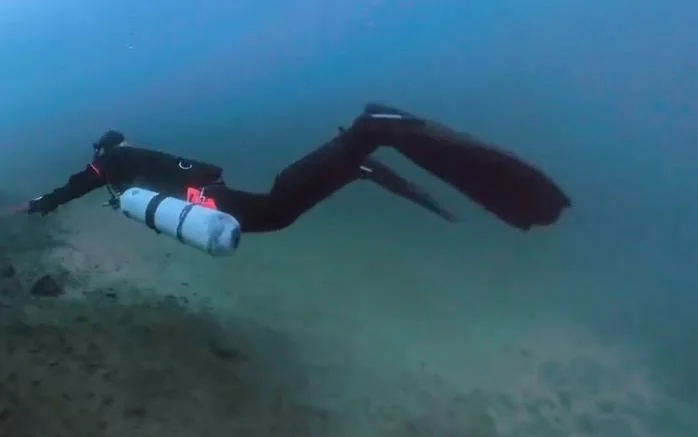
Calm breathing, balance, confidence in your own skills, and situational awareness - they all give you control in uncertain conditions and provide buoyancy. Buoyancy is the state of happiness in diving. It is the perfect balance that allows us to hover motionless in the water. It is the state between carrying too much weight and not carrying enough. A diver takes equipment underwater, including weights, which help achieve the ideal weight. When a diver is too light, they are pushed upwards. When they are too heavy, in the best-case scenario they have to compensate by adding air to the buoyancy system. Buoyancy gives control and safety, because an uncontrolled and too rapid ascent is very dangerous. Divers do not really swim, they remain in a state similar to weightlessness, like astronauts. That lightness and feeling of flying is a wonderful sensation and one of the fundamental skills of a diver.
lesson 6 Notice what puts wind beneath your wings, and nurture that strength.
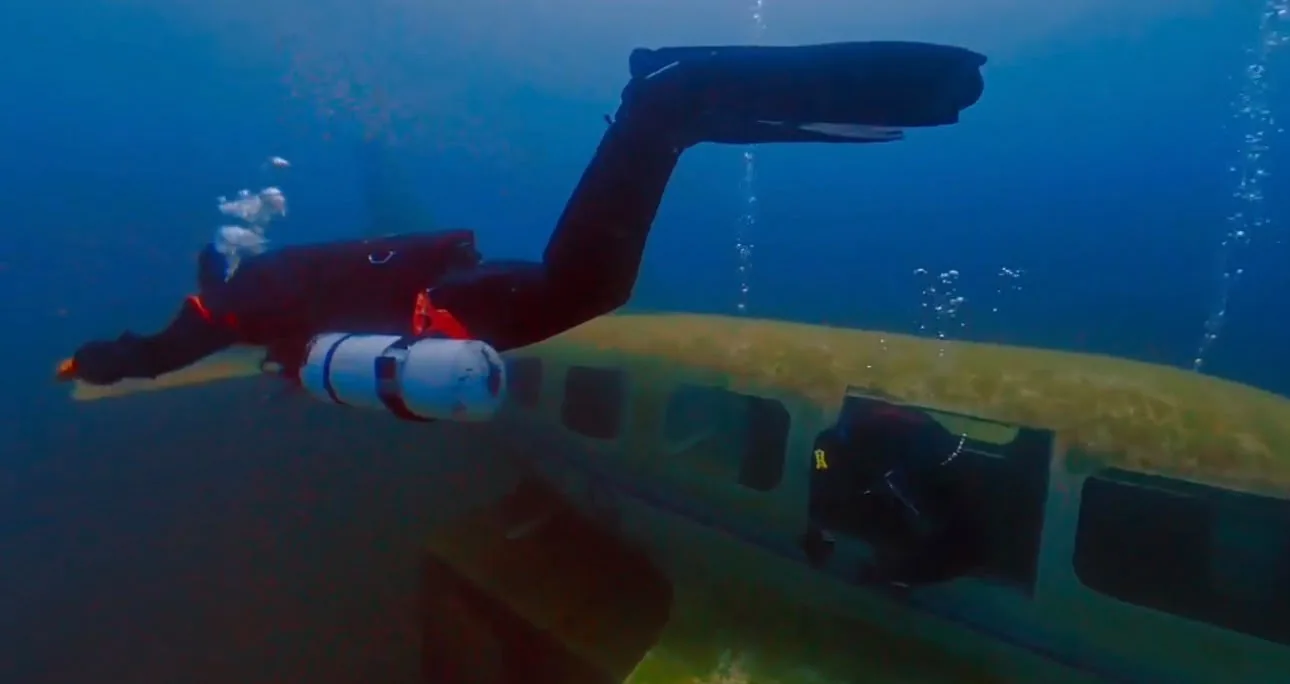
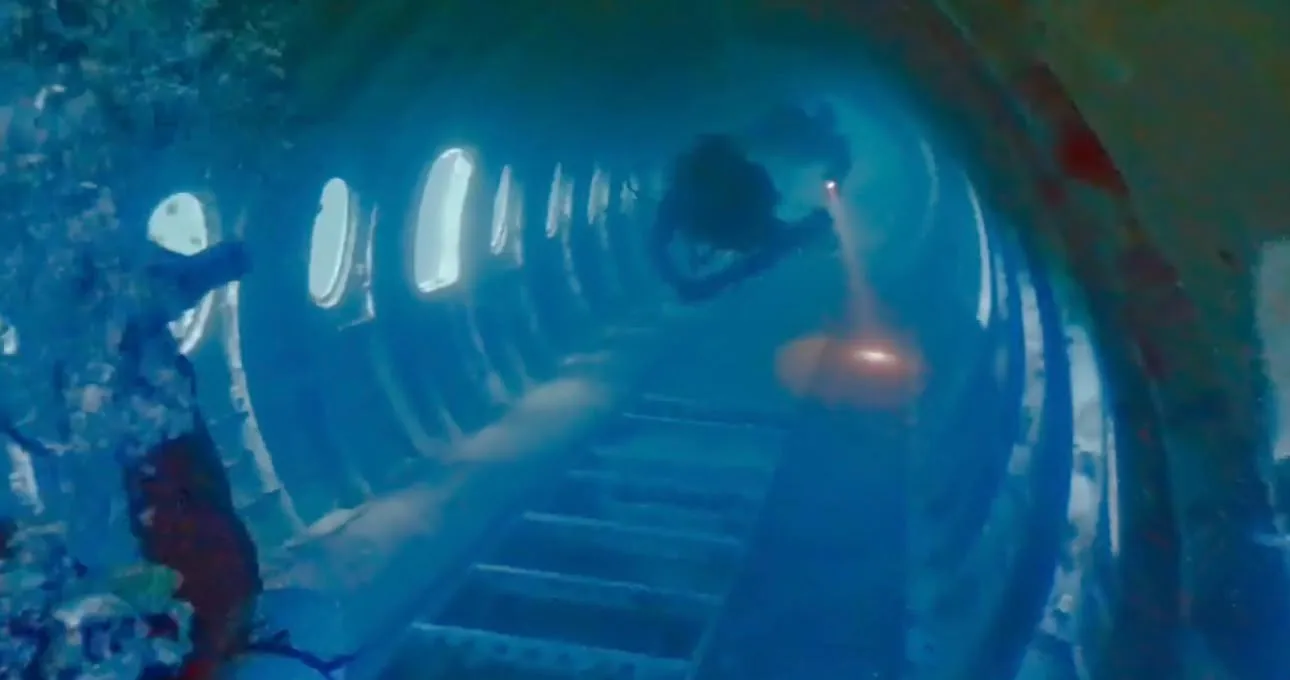
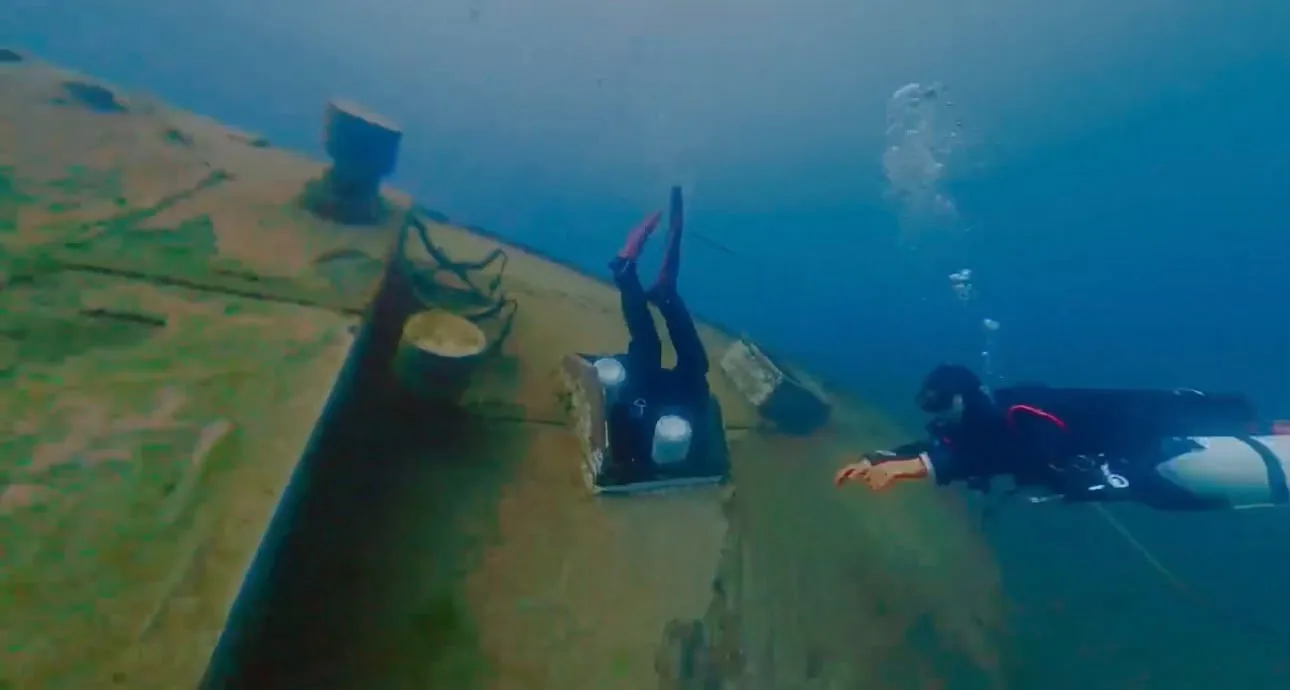
If the vis is on our side, what can we see underwater in in the UK? Here, we dive in the sea, in lakes, in flooded mines and in quarries. Wrecks from the World Wars are popular, for example in Scapa Flow. You can also dive with seals, especially around the Farne Islands. In quarries such as Stoney Cove or Capernwray, we can find sunken attractions and good training conditions. I love wreck diving. Sunken ships are beautiful. Underwater life gathers and grows around them. They offer views, adventure and a play of light. There is something majestic about them as they remain in the underwater world, serving a purpose for which they were never designed or built, and yet none of this takes away from their value.
Bonus lesson If you ever worry that you are spending too much money on something, remember that divers pay for air! (A quote from a dive buddy).
What is the next lesson ahead of me? Perhaps it is the answer to the question: What is hiding me from myself so successfully, that only when I descend into dark, cold and murky water, where I can clearly hear my breath and my heartbeat, I do return to myself?